Thursday, May 22, 2014

Some Brief Thoughts On The Americans

“Echo” might be the most appropriate title for an episode of television in quite some time. Not only because much of The American’s finale revolved around Echo—the stealth computer technology developed by the Americans and that the Soviets are desperate to acquire—but because so many little details and lines of dialogue reverberated throughout the entire second season to reemerge at intermittent volumes in this final hour. A lot happened in this episode—heck, a lot happened this season—with various plots intertwining and coming to a head in spectacularly assured and quiet fashion.

In the wake of the finale, I immediately thought back to a moment from the first episode of the season: when Philip tells Emmett, “We never use our kids,” before he reluctantly agrees to use his own son Henry as an identifier to quickly and harmlessly pass along information (unbeknownst to Henry, of course). Compare that to the final scene of “Echo” and the look on Philip’s face when he realizes Elizabeth is actually considering bringing their eldest daughter Paige into the espionage fold at the Center’s request. “It would destroy her,” he says. “To be like us?” Elizabeth asks before sitting down to family dinner. And in that ending you can’t help but think back to everything we know about Paige. The first season ended with her snooping through the basement, convinced her parents were hiding something. This season started with her continuing this detective work and taking secret trips to Pennsylvania to further investigate her parents, only to eventually give up and rebelliously join a church. As Elizabeth mentions, Paige has been yearning for something to dedicate her life to. Paige explicitly says she is attracted to the church because Jesus gave his life for something greater than himself, and that it inspires her. This chick has passion and you can almost hear Paige’s conviction echoing in the silences between Philip and Elizabeth at episode’s end.

Now also take into account what Philip and Elizabeth saw happen to Jared within this same episode. As we found out in this finale, Jared was contacted by the Center, began training behind his parents' backs, and when his parents, Emmett and Leanne, found out and disapproved, Jared killed them along with his younger sister...all for “the cause.” We spent an entire season trying to find Emmett and Leanne’s killer but it was their poor surviving son, Jared all along. Bleeding from the neck of a gunshot wound he spills his guts in a very well-acted yet frustratingly long moment. But the truth he reveals and the worst case scenario he represents for the path Paige could take rings loudly in every interaction Philip and Elizabeth have thereafter. And I’d hate to admit it, but Elizabeth may have a point. We saw what sacrificing for the greater good did to Jared, turning him into a ruthless and stoic monster with nothing to anchor him as his parents rejected this chosen path. But if Elizabeth and Philip nurtured Paige, their own daughter who is relentlessly looking for a purpose and something larger then herself to commit to, they will not only be training her for espionage, but teaching her how to survive on her own if/when the inevitable arrives.

I could probably write a whole essay about how almost every poignant moment this season succeeded because of the echoes of past events and realities. From Elizabeth using the details of her own rape as a young cadet to wholly manipulate a Navy seaman in Virginia Beach, to Philip’s growing existential despair bleeding into his treatment of Martha, the Jennings are such calculated manipulators because they use honest details to provoke dishonest emotions. They're method actors who use their marks to work through their own personal and marital issues, even if they don't realize they're doing it. The audience sees all this in the space between the Jennings reality and fabrication. Which further relays how the best thing about The Americans, and “Echo” in particular, is everything that is left unsaid: the realities and realizations that the audience is left to connect on their own during the many silences and 80s montages.

Every action has a consequence and oftentimes we are simply waiting for the other shoe to drop. Like Elizabeth said last week, “It’s coming.” And she’s definitely not referring to winter (we’re in the midst of a Cold War filmed during the Polar Vortex of 2014, winter has already arrived), but simply the inevitable. And not just the inevitable conclusion to a life lived as a spy on foreign soil, but the inevitable conclusion to an unsustainable life. (Which would naturally bring me to the Stan/Nina/Oleg storyline and all of its silent goodbyes that echoed of past promises and impossible futures, but that could be a whole separate essay as well). Philip knows their reckoning is inevitable and that his current situation is unsustainable as much as Elizabeth. He has struggled to psychologically and emotionally handle the consequences of his actions in the wake of a rising kill count and dwindling belief in his cause. And he never says it but we see it in his demeanor, his after hours visit to Paige's church, and how he takes it all out on Poor Martha.

Yes, I found flaws in this final episode of the season. The anticlimactic end to Larrick as well as Jared’s  exposition laden death scene come to mind. But to be honest, I could nitpick any episode of television to death. And when I think back to what this finale says about the season as a whole and how assuredly it is put together, it’s easy to look past those lesser moments in favor of the larger picture. To make sacrifices for the greater good. 

And dammit, this show is so much greater than good. It's by far one of the best things on television.

Tuesday, April 29, 2014

More Like "Game of Rape"

As you may have heard, last week on Game of Thrones twincest took a dark turn: Jamie Lannister raped his sister over the corpse of their dead son in the Sept of Baelor. The weird thing is that the scene plays out almost the exact same way in the A Song of Ice and Fire books with one notable difference: the rape. It was already a disturbing scene and for whatever reason the show's writers chose to add a rape element to the proceedings. While this creative decision did not really bother me, what did bother me is that nearly everyone involved with the scene had no idea that they were portraying a rape (I say "nearly everyone" because we have yet to hear from the one female involved: Lena Headey who plays Cersei Lannister). And regardless of what all these men may believe, regardless of what they intended, what the audience got was a rape scene. If they were trying to evoke the same sense of ambiguity that happens in the book, well then they failed miserably. Because oopsy-daisy, that was a clear cut rape. And it wasn't the first time the writers have interpreted the book with a twist of sexual assault.

The very first episode of Game of Thrones, Daenerys and Khal Drogo consummate their new marriage with Drogo forcing himself on Daenerys. Meanwhile, in the books, Drogo makes a point to wait for Dany to consent. (Yes there was some seductive manipulation of a 13 year old, but at least he waited for a "yes.") The show version of Daenerys fell in love with her brute of a rapist while the book version of Daenerys fell in love with her affectionate husband. That is a huge difference. A difference that could greatly inform how we perceive a character's development. But it has been largely forgotten.

Back to last week's accidental rape. I put off writing about this particular change hoping the show's creative team would realize they at least introduced a complication to the lives of Cersei and Jamie (And according to the team's statements over the past week, they did intend the scene to at least play ambiguously...or so they claim). I thought perhaps they would deal with the fallout in the weeks to come. I waited a week and absolutely nothing was addressed or even seems like it will be. Instead Jamie was portrayed in the best possible light. He was sympathetic, honorable, and showed positive growth. And because this is where Jamie has been headed since last season, I thought that Benioff and Weiss added a darker element to the sept scene to possibly complicate his redemption arc. But that's not the case. (Nor have we seen how Jamie's sexual assault could exacerbate Cersei's downward spiral.) It seems like, to me, it has already been forgotten. They simply chose to punch up a scene with a little harmless rape. But could we have at least acknowledged this hurdle to Jamie's growth? At the very least, could we have not made him the good guy at the end of his latest scene with Cersei?

And as if Cersei/Jamie and Daenerys/Drogo weren't enough, this Sunday's episode also diverged greatly from the books. Most notably the events happening with the Night's Watch and the mutineers at Craster's Keep. And what was happening at Craster's? Some serial rape. Listen, I know that the Night's Watch is largely made up of thieves and rapists. We all know it. My issue with the scene is related to my issues with the Cersei/Jamie scene last week: that these circumstances were disturbing enough without that added explicitness of sexual assault. I didn't need to see a brother of the Night's Watch going to town on some poor girl throughout the entire duration of the scene. Meera witnessing a brother drag a shrieking girl through the snow was plenty. Drinking out of Jeor Mormont's skull was plenty. "Fuck them till their dead" was plenty. We know these poor girls were raped repeatedly by Craster and they are now being raped repeatedly by the Night's Watch. It's an awful thing that was treated cheaply for some background scenery. This was a gratuitous and cavalier use of rape by the show's writers after a whole week of debating whether they can even recognize rape when they see it. It was distasteful, disturbing, and unnecessarily explicit. The show filmed and scripted a gang rape with the same nonchalance they do a brothel scene. But someone should let Benioff and Weiss know the two aren't interchangeable.

Whether it is excessive sex or violence, Game of Thrones thrives in excess period. Audiences have come to expect a certain degree of explicitness from their HBO fair, and from Game of Thrones especially. Ask someone who's never watched the show what they know about Game of Thrones and they'd probably say that it is violent and pornographic (and that there are dragons). But lately the show has been pushing the envelope at the expense of character and story. And the scene at Craster's was exactly that. It was the show trying to outdo itself and it was beyond overindulgent.

Let us not forget the whole mutineer plot and rape scene were made up for the show. In a similar way to how Cersei and Jamie's sept moment was changed for the show. Likewise Dany and Drogo. George RR Martin never shied away from rape in the books, but he never needed to be explicit about it either. We got the point through subtext. GRRM always made it clear that women simply are not safe in the world he created. That Cersei was broken and had turned to alcoholism and bitterness to cope with the regularity at which Robert raped her. Sansa has had more than one near rape experience. As has Brienne. GRRM was never cavalier about any of this. He made it a point to color his world as depraved, chaotic, and dark through the overwhelming presence of violence, death, and loss of innocence. If anything, the threat of sexual assault added weight and consequence to his world. But what we got on Game of Thrones this past Sunday was cheap. It was distasteful. And most disturbing of all, it made a game of rape.

Wednesday, April 2, 2014

About That How I Met Your Mother Ending

NOTE: The following post contains SPOILERS concerning Monday night's series finale of How I Met Your Mother.


Usually I think people put too much stake in endings. But when the ending is the title of your freaking show, then you should probably get it right.

Here's my issue with the How I Met Your Mother finale: none of it felt earned. The scene with Ted and his kids was filmed all the way back in season two. So the writers knew how they wanted HIMYM to end and orchestrated everything to get to it. And while I personally have nothing against Ted and Robin, that entire ending was a slap in the face. Show runners Craig Thomas and Carter Bays literally had years to build to the Ted/Robin ending in a satisfying way. But instead they wasted our time for the sake of misdirection and "classic" HIMYM hijinks.

Knowing since the pilot that Robin and Ted would not--and premise-wise, could not--be together, the show instead tried making Robin and Barney into a plausible couple. We spent a large part of the later seasons cultivating this relationship. The entire final season revolves around their wedding weekend. And whether you bought the pairing as realistic or not, it was pretty clear the show was committed to this coupling, so the audience had no choice but to accept it as fact. The wedding was literally seasons in the making, yet the finale tore it apart as quickly as you can say, "We got a divorce." I was dumbfounded at the audacity of it all.

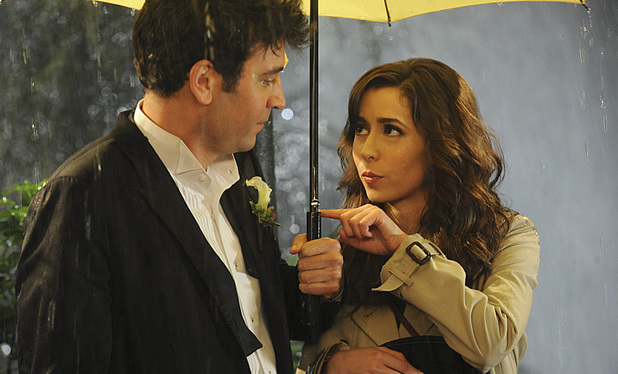
Similarly, we spent this entire final season getting to know The Mother, Tracy. She became a character. She became a pretty great character. Someone perfect for Ted. And someone his friends and fans were happy to see him end up with. Everything involving Ted and Tracy were the best parts of the finale, particularly the titular meeting under the yellow umbrella (which cast a great, warm glow over the couple). Towards the end of the season it was implied The Mother would be sick in the future and we all began speculating that she might end up dying. Because why else would Ted be telling the story of how they met? But what was really concerning was how she was only in a ninth of the story Ted was telling his kids. If she was in fact dead in 2030, how horrible is it that Ted spent all that time talking about Robin and every other random woman he dated/loved/proposed to? When asked, Thomas and Bays, as well as the mother herself--actress Cristin Milioti--assured fans this was not the case. But it was the case.

I'm actually not upset that The Mother dies. And I'm not upset that post-divorce Robin and widow Ted get together. And I realize the show was really never about The Mother. But what does upset me is that we spent an entire season getting to know The Mother as a great character. And her death gets glossed over just like Robin and Barney's divorce. The Mother's death gets sidelined. And the tone immediately after in the scene between Ted and his kids, is just straight up weird. They gleefully encourage their father to call Aunt Robin and ask her out. I realize in the world of the show it has been six years since Tracy's death. But in the real world of me watching this show, her body is still warm. Hot even. The transition was abrupt. And the subsequent scene of older Ted recreating the blue French horn moment for older Robin felt cheap, shallow, and cold. And its not because Ted shouldn't be with Robin. It's because it all happened way too quickly and awkwardly.

No one told the writers they had to waste an entire season on Robin and Barney's wedding. I don't understand why that couldn't have been half the season. Because everything that happened in the hour-long finale could have easily filled the other half. Take your time. It's already been nine seasons, we're in no rush. Spend a couple of episodes on Robin and Barney's marital issues, on Barney's regressive man-boyhood and fatherhood, on Marshall and Lily having another baby and moving out of the apartment, on The Mother getting sick, and on saying goodbye to Tracy. One thing the finale did really well was make me believe in Ted's love for his wife. And I would have loved to see more of that. Because she deserved a goodbye and Ted's character deserved time to grieve. And we should have seen Ted care of her and later his melancholic widower years. And I would have even liked to see Robin reenter Ted's life to help him through his grief. So that the audience could see what Ted's kids see. Because Ted wasn't just telling this story to his kids, he was telling it to all of us. We might as well have been on the couch right along next to them. And so we might as well have been nodding along when they encouraged Ted to move on.

If we saw all that. If we took the time to build towards it. Then maybe when we realized what the last minutes of the finale were doing, we would have smirked rather than cringed. We wouldn't have felt like the love of Ted's life, the mother of his children, was being sidelined. Maybe we would have realized Ted's heart was big enough for two big loves. Tracy's was. And our hearts would have warmed because maybe we would have been rooting for this ending to happen. Because it would have felt earned. We would have been okay with it. And it would have been legen...wait for it...dary(ish). But we got none of that. The asinine structure failed us. We got awkward pacing, frustration, and disappointment. If things were more carefully structured we could have gotten an "I got off the plane" moment instead of HIMYM's version of a sad trombone: the blue French horn.

Friday, March 14, 2014

Calm Down About The True Detective Finale

First of all, the finale wasn't bad. Second of all, plot-wise, the show was never tight enough to imply some mind-blowing ending. It had a lot of things going for it, but it was never that good. Listen, I always appreciate a rich, complex show--something fans can pore over and dissect. And True Detective had lots of details to pore through, but what happened in its eight episodes that made you think it would be anything more than it let on? Because of the fact that there were so many details of the Dora Lang/Yellow King case? It was a case spanning seventeen years, it involved lots of people and lots of victims, of course there are going to be files upon files. But what made anyone think every single piece would be relevant? That doesn't happen in real life. And it certainly didn't happen on True Detective at any point to warrant this expectation. The show was only eight episodes but there was never once a moment where dozens of things came together to blow our minds at the sheer ambition and genius of it all. There was never a point where the show proved capable of bringing multiple details together to make us think everything was linked and important. That's not to say it wasn't a rich show. Every scene was important and heavy, leaving us with much to absorb...but it was never about the crime. It was always about the detectives.

Evidently, I really have no idea why everyone was raising the stakes of the final episode because the show was clearly about Rust and Marty all along. It was about Rust's despair as he filled his heart with nihilism and philosophical thought to make sense of the trauma in his life. But he never really had a unique philosophy of his own. I was always under the impression that when he went off on his spiral loops of pontification, that he was working something out for himself. That he was obviously well read and that he had made sense of these ideas, but that he was still applying them to his life, still trying to build a personal outlook of his own as he drowned in a half empty glass of pessimism. Like an eye exam, he was sliding one lens after the next over his eyes, comparing them and going back and forth until he found a flat circle suitable enough to perceive the cruel world around him. We all try to make sense of our lives, but Rust lived through a unique trauma of his own. And lacking the constitution for suicide, he had to learn to carry on living. Meanwhile Marty was living his life like most of us live our lives, delusional and hypocritical, but within a certain set of standards and expectations. Being a man meant boozing and banging, but being a family man meant loving your wife and children. We all contain multitudes, but sometimes those 'tudes aren't in sync. Marty thought he had a grasp on what his life was supposed to be, but his actions told a different story.

Thus, going into Sunday's episode I wasn't expecting an amazing Yellow King realization, I was expecting some character work. And I honestly didn't even care too much about the crime because the show never asked us to care. We didn't know anything about Dora Lang to provoke our sympathies or need for justice. The other victims were just names with some blurry circumstances tacked on. Terrible things were done to them, a monster was absolutely on the loose and needed to be caught, but from an emotional standpoint I wasn't too invested in justice for the victims (which some people have fairly consider a drawback of the show). I was invested in Rust getting his man, but not because of Justice. Because Rust needed it to happen so he could move on. And that was essentially what we got, only with a bit of the unexpected. Rust ended the show an optimist, something I honestly never saw coming. Which is a twist in itself, but also a realization and a character journey I absolutely believed. For anyone who thought the answers in the finale were weak and that there was no payoff, I argue that there was a payoff. You were just looking at the wrong clues.

In terms of overall general impressions of True Detective, my biggest criticism would be that it meandered a lot in plot threads that seemed important but led nowhere. For example, I really loved the six minute tracking shot as much as the next person, but it really had nothing to do with anything. It had such a minuscule impact on the plot that putting that much effort into that scene is actually a bit of overkill. But the technique was absolutely impressive and it definitely succeeded in producing one hell of an astoundingly tense sequence. And in a similar vein, I loved the craft and quality of this show. I loved the direction by Cary Fukunaga, who directed a great and underrated adaptation of Jane Eyre in 2011. The lead performances were amazing and we'll definitely be seeing more of the Matthew/Woody bromance come award season. The set pieces, locations, and art direction were so lush that you felt immersed in this secluded world. And what really made it all was the cinematography--cinematographer Adam Arkapaw also worked on last year's Top of the Lake, which I loved for similar reasons but also because it was really good...like probably better than True Detective (depending on your taste, of course) and it's a damn shame it didn't get the same sort of attention. But I digress.

I realize there are a lot of issues with True Detective's portrayal of women. Some of it I agree with and some of it I don't. The lack of attention on women is actually why I lacked interest in the case itself. But there was also criticism concerning the scene where Maggie and the girls visit Marty in the hospital. Many saw this moment as redemption for a schmuck of a character. I didn't see it that way. I mean yeah, Marty is a schmuck, but Maggie didn't forgive him or offer him any sense of redemption. Maggie could have been more solid of a character, but I knew enough about her to know she's a decent human being. And the father of her children just nearly died quite brutally while doing a very brave thing. So yes, she's going to pay him a visit. But it by no means implied all was forgiven or that things would even change. Her wedding ring was so prominent in the scene for a reason. Instead, that moment was actually about Marty's facade and self-delusion fading. I agree with critics who feel True Detective's women are only used to inform the male characters. But I chose to see that moment as a supporting character informing a main character. Gender had nothing to do with it. But I agree women should/could have been used differently on True Detective. That instead of focusing so much on dead ends like the random prisoner who killed himself in his cell after an unknown phone call, maybe we could have flushed out those females a bit more.

But hey, nothing is perfect. Certainly no television show is. You have to accept things for what they are, flaws and all. And it may seem like I look at True Detective and see a whole lot of dark. But I actually choose to focus on its bright spots of brilliance. And what I really see is the light winning.

Saturday, February 15, 2014

House of Cards: Season Two

So this time last year, I decided to write a "Continuous Blog" of Netflix's premier dramatic series, House of Cards. At the time, Netflix's decision to release the entire season all at once for people to watch at their leisure was a novel idea. A year later I still think this a fun and interesting way to release a series. And because of the fact that it easily lends itself to binge watching, I had decided to update one long post with my thoughts after each episode. This way, anyone who wished to watch the show, could do so along with me. Since then we've gotten a few series from Netflix released the same way, and for which I didn't continuously blog  my thoughts about. It was a project I really enjoyed doing. So while the first season of House of Cards wasn't my favorite (I couldn't get over my issues with the writing) it definitely had its quality moments in acting, directing, and style. And because I enjoyed doing my blog so much last year, I figured why the hell not get at it again for the show's second season?

So click through, and below you will find my thoughts of each chapter of the second season. I will update as I go along so yes, there will be SPOILERS. I hope no matter where you are or when you're watching this show, you join me. This day in age, just because we can watch things at our own pace, doesn't mean we can't still do it together.


Tuesday, December 17, 2013

Top TV: Honorable Mentions

Yesterday I offered just the tip of my Top TV of the year, but because there was so much fantastic programming, I will now present you with my... Honorable Mentions!
(Believe me, these are all worth mentioning).

Veep- The second season of Veep was a hoot and it might just be my favorite comedy currently on television. Julia Louis-Dreyfus deserves all the recognition she gets for this show as she hilariously leads a superb comedic cast. (HBO)

The Returned- When I was discussing Sundance Channel in my Top TV post, I quickly mentioned that I am currently engrossed in this French show. If it wasn't for the fact that we're mid-season, there was a very good chance this would have made the list. I love the concept of this program and the melancholy feel it evokes. I went into it expecting a horror show, but got so much more than I could have bargained for. (Sundance)

Girls- We all know how much I love Girls. I had some issues with this past season, but there were also some inspired stand outs. "Bad Friend" in which Hannah raves in a mesh top was a delight. And "One Man's Trash" would easily be in my top five episodes of the past year. (HBO)

Orphan Black- Orphan Black is sci-fi in spades. And Tatiana Maslany IS Orphan Black. If it wasn't for her I don't know if this show would be nearly as good as it is. Playing up to four different characters in one episode (including characters impersonating other characters) is impressive enough, but doing it so convincingly that I straight up forget that it's the same actress and actually believe that these characters are all different people is a feat worthy of all the awards television has to offer. And lets not forget to mention the comedic beats, shocking turns, fun accents, and scientific mysteries we get along the way. (BBC America)

New Girl- If I had to give out a Most Improved Show Award I'd give it to New Girl. It found its groove in its second season and it was fun to see it work through the kinks, figure out its characters, and deliver a very funny program with its own brand of humor. Plus Coach is back! (Fox)

Broadchurch- I thoroughly enjoyed this British drama starring David Tennant in another series that does The Killing better than The Killing (the other being Top of the Lake). Broadchurch was beautifully shot, tragically plotted, truly engrossing, and expertly acted. Word on the street is that we will be getting an American version soon--also starring David Tennant (but with an American accent which will be bloody strange if you ask me)--and I fully intend on watching even if I already know who did it. (BBC America)

House of Cards- I may have had a lot of issues with the writing on House of Cards--which really is a deal breaker for me--but everything else about this show deserves a mention. The directing and acting are undeniable. David Fincher set an exquisite tone for the show and Kevin Spacey was amazing, as always. But the breakthrough performance from Corey Stoll was probably my favorite thing about the series (you could say he stoll the show). And I have to admit, the promos for the upcoming second season have me pretty pumped for a continuation of the story. Lets just hope they don't do anything stupid. Again. (Netflix)

Parks and Recreation- Do you guys seriously think I'd leave the most consistent comedy on television out of my year end recap? I love Parks and Rec. Yes it may be getting stale in its later seasons, but it still manages to move me and make me laugh. And for that, it will always get a shout out. (NBC)

Arrested Development- AD gets a nod for pure ambition alone. Overall I didn't love the season, but it sure had a lot of fun with its structure. (Netflix)

Monday, December 16, 2013

D's Top TV of 2013

Its about that time of year when you will see many Top Ten lists of The Best TV or Films or Books or Whatnot of the year. I am personally ambivalent when it comes to such lists. Maybe blame it on Buzzfeed fatigue but I just find ranking and comparing series that are so different from one another to be slightly arbitrary and meaningless. But I find value in dissecting what I've responded to in the past year, as it helps me to further understand my personal taste. And I like doing these year end recaps as a way to recommend programming to anyone who may trust my judgement or share my preferences.

So I'm not ranking these programs. I'm just spotlighting ones that I found to be the best of the year. But please take all of this with a grain of salt as I have clearly not watched everything on television. I gravitate towards certain types of programming and so it is from those heavenly bodies that I judge the landscape before me.

Enlightened (HBO)
I wrote about Enlightened earlier this year when its fate was still uncertain. Now we know that this excellent program was not picked up for another season. There is nothing else like Enlightened on television. It was earnest, existential, spiritually provocative, and refreshing in ways no other program is. I am beyond disappointed that such a fantastic program has been denied the chance to continue to grow and bloom. But I am grateful for the few beautiful episodes we were afforded this past year. And I hope creator Mike White is given the opportunity to run a similar show in the future.
Season Highlights: Episode 2.5 "The Ghost is Seen" was one of my favorite episodes of any show this past year. It opened with such melancholy and closed so quietly hopeful that you'd have to be heartless not to emotionally respond to such superb storytelling.

The Americans (FX)
I straight up loved the first season of this show. I don't know what I was expecting going into it, but The Americans ended up being the best freshman season of a program since Homeland. I don't understand how it could get overlooked by both the Emmys and the Golden Globes, but good riddance. As much as it deserves recognition, I don't need award pressure and blowback surrounding this program. I mentioned The Americans a couple of times this year but all you need to know is that the performances are great, the writing is great, the directing is great, the spy games are fun, the characters are dimensional and sympathetic, and the costumes/wigs are awesome. And above all, it easily has the best soundtrack on television. Forget Glee. Forget American Horror Story (as much as I love all the Fleetwood Mac this season). The Americans uses pop music like no other. Just ask The AV Club.
Season HighlightsALL OF IT Episodes 1.3 and 1.10 "Gregory" and "Only You" are essentially companion episodes revolving around the introduction and fate of a compelling supporting character.

Top of the Lake (Sundance)
Before I get into Top of the Lake, may I mention how Sundance has been killing it? The Sundance Channel introduced its own scripted programming only this year and every single show has been right up my alley. Top of the Lake happens to be the first of these scripted programs to air and its quite a hard act to follow. Directed by Jane Campion, this miniseries was confident, beautifully shot, deliberately paced, fantastically acted, and reached Twin Peaks level of quirky. Elisabeth Moss led the cast and put in a spot-on performance. Keeping in mind her work on Mad Men along with her work on this miniseries (not to mention her fake New Zealand accent), its easy to recognize the immensity of Elisabeth Moss's talent. The rest of the cast also did top notch work as Top of the Lake delivered in all the ways AMC's The Killing never could. Sundance followed up Top of the Lake with Rectify and then the excellent French series The Returned (which I am currently engrossed in). Each show has the same feel proving that with only three series, Sundance Channel already has its own style of programming and I can't wait to see what else it has in store.
Season Highlights: As it is a miniseries it is hard to pin point one episode over another, but the final two installments are suspenseful, heartbreaking, and revelatory. Which essentially makes the whole series worth watching.

Game of Thrones (HBO)
Listen, I just love me some fantasy/sci-fi. And Game of Thrones is an epic fantasy whose grandiosity increasingly entertains as it continues. But what makes the show so good has nothing to do with its fantasy elements and everything to do with its ballsy, earned, and robust storytelling. This past season was the first time I watched the show after having already read the books and it certainly didn't take any of the enjoyment away. Yes, on some level I robbed myself of a doozy of a television experience, but knowing it was coming didn't diminish the shock in any way. (Just ask anyone who hasn't read the books but has rewatched the season). My only real criticism is probably the very cheesy, kind of racist, over-the-top scene that closed the season finale (but this amazing gif-set, which is cheesy in its own right, made it all better).
Season Highlights: Episode 3.9 "The Rains of Castamere," duh. It was quite possibly one of the most talked about television events in recent history and a huge game changer.

Mad Men (AMC)
When it comes to Mad Men, either you love it or you don't. The latest season definitely wasn't the best of the series, but when it comes to such a rich show, does that really even matter? This past June I wrote an impassioned post about Mad Men's most recent season and I honestly don't have much else to add except that regardless of season, Mad Men is one of the most engrossing and well-crafted series on television. Period.
Season Highlights: As I've said in the past, an entire season of Mad Men is like a good novel and so choosing a favorite episode is sometimes like choosing a favorite chapter of a book (which is kind of an awkward thing to do). It'd be easier to pick out various moments. But Episode 6.6 "For Immediate Release" was absolutely a highlight as it captured a sense of exhilaration reminiscent of the show's classic third season finale.

Orange is the New Black (Netflix)
Basically all summer all anyone talked about was this show, and with good reason. Because holy cow, what a fantastic program. As I mentioned in July, it was incredibly hard for me to shake Orange from my system (not that I wanted to). Something about Orange stuck with me. Beyond its tight structure, great writing, and celebrity directing (Jodie Foster, people!), it was the dimensional characters that made this show what it was. And I admire Orange for its large and diverse female cast, the likes of which we rarely seen on television--especially not in such an enriching format. I'm counting down the days until we get more.
Season Highlights: When you binge-watch a show, episodes tend to bleed together. But episode 1.5 "The Chickening" was a particular stand out in its zaniness. And the end of Episode 1.11 "Tall Men With Feelings" with its fantastic nod to NPR, the montage that it involves, and the circumstances after, is another favorite.

Breaking Bad (AMC)
What is there to say about Breaking Bad? I never wrote a post regarding this series last season as I found it hard to parse out my thoughts on the finale. Months later I find that the final episode doesn't necessarily hold up as well as I would like, but thats fine because everything that came before it was absolutely amazing and expertly executed on every single level. And as for the finale I can't fault it for tying things up so neatly after the explosive episodes we got before it. Walt basically moving like a ghost throughout the final episode, entering and leaving scenes without notice as he calmly tied up lose ends, offered a moment to catch our breaths right before the end. I loved the creepy aspect of Walt prowling about with such ease and confidence as compared to the clumsy fool we met years ago. And how we got there was a crazy wild journey, so far beyond anything else on television. I always said no one does intensity like Breaking Bad, and that was absolutely true from the get-go in this final half of season five. This was one of the best series of television to ever grace our screens. Every season somehow improved on the one before it leaving us with this gem of a final season.
Season Highlights: Forget everything I just said about the finale. Because that was the epilogue. Episode 5.14, the explosive "Ozymandias," was the true ending to this show. Not only was "Ozymandias" arguably the best episode of Breaking Bad, but it was one of the best episodes of television I have ever seen. Everything great about Breaking Bad was expertly exhibited in this one hour of television and everyone watching was left with their jaws on the floor, their hearts pounding, and their minds reeling. The emotion, the performances, the pace, the writing, the directing...every single thing was spot on. And its why Breaking Bad was arguably the best thing on television in 2013.


But wait! That not all....