Yesterday I offered just the tip of my Top TV of the year, but because there was so much fantastic programming, I will now present you with my... Honorable Mentions!
(Believe me, these are all worth mentioning).
Veep- The second season of Veep was a hoot and it might just be my favorite comedy currently on television. Julia Louis-Dreyfus deserves all the recognition she gets for this show as she hilariously leads a superb comedic cast. (HBO)
The Returned- When I was discussing Sundance Channel in my Top TV post, I quickly mentioned that I am currently engrossed in this French show. If it wasn't for the fact that we're mid-season, there was a very good chance this would have made the list. I love the concept of this program and the melancholy feel it evokes. I went into it expecting a horror show, but got so much more than I could have bargained for. (Sundance)
Girls- We all know how much I love Girls. I had some issues with this past season, but there were also some inspired stand outs. "Bad Friend" in which Hannah raves in a mesh top was a delight. And "One Man's Trash" would easily be in my top five episodes of the past year. (HBO)
Orphan Black- Orphan Black is sci-fi in spades. And Tatiana Maslany IS Orphan Black. If it wasn't for her I don't know if this show would be nearly as good as it is. Playing up to four different characters in one episode (including characters impersonating other characters) is impressive enough, but doing it so convincingly that I straight up forget that it's the same actress and actually believe that these characters are all different people is a feat worthy of all the awards television has to offer. And lets not forget to mention the comedic beats, shocking turns, fun accents, and scientific mysteries we get along the way. (BBC America)
New Girl- If I had to give out a Most Improved Show Award I'd give it to New Girl. It found its groove in its second season and it was fun to see it work through the kinks, figure out its characters, and deliver a very funny program with its own brand of humor. Plus Coach is back! (Fox)
Broadchurch- I thoroughly enjoyed this British drama starring David Tennant in another series that does The Killing better than The Killing (the other being Top of the Lake). Broadchurch was beautifully shot, tragically plotted, truly engrossing, and expertly acted. Word on the street is that we will be getting an American version soon--also starring David Tennant (but with an American accent which will be bloody strange if you ask me)--and I fully intend on watching even if I already know who did it. (BBC America)
House of Cards- I may have had a lot of issues with the writing on House of Cards--which really is a deal breaker for me--but everything else about this show deserves a mention. The directing and acting are undeniable. David Fincher set an exquisite tone for the show and Kevin Spacey was amazing, as always. But the breakthrough performance from Corey Stoll was probably my favorite thing about the series (you could say he stoll the show). And I have to admit, the promos for the upcoming second season have me pretty pumped for a continuation of the story. Lets just hope they don't do anything stupid. Again. (Netflix)
Parks and Recreation- Do you guys seriously think I'd leave the most consistent comedy on television out of my year end recap? I love Parks and Rec. Yes it may be getting stale in its later seasons, but it still manages to move me and make me laugh. And for that, it will always get a shout out. (NBC)
Arrested Development- AD gets a nod for pure ambition alone. Overall I didn't love the season, but it sure had a lot of fun with its structure. (Netflix)
Tuesday, December 17, 2013

Monday, December 16, 2013
D's Top TV of 2013
Its about that time of year when you will see many Top Ten lists of The Best TV or Films or Books or Whatnot of the year. I am personally ambivalent when it comes to such lists. Maybe blame it on Buzzfeed fatigue but I just find ranking and comparing series that are so different from one another to be slightly arbitrary and meaningless. But I find value in dissecting what I've responded to in the past year, as it helps me to further understand my personal taste. And I like doing these year end recaps as a way to recommend programming to anyone who may trust my judgement or share my preferences.
So I'm not ranking these programs. I'm just spotlighting ones that I found to be the best of the year. But please take all of this with a grain of salt as I have clearly not watched everything on television. I gravitate towards certain types of programming and so it is from those heavenly bodies that I judge the landscape before me.
Enlightened (HBO)
I wrote about Enlightened earlier this year when its fate was still uncertain. Now we know that this excellent program was not picked up for another season. There is nothing else like Enlightened on television. It was earnest, existential, spiritually provocative, and refreshing in ways no other program is. I am beyond disappointed that such a fantastic program has been denied the chance to continue to grow and bloom. But I am grateful for the few beautiful episodes we were afforded this past year. And I hope creator Mike White is given the opportunity to run a similar show in the future.
Season Highlights: Episode 2.5 "The Ghost is Seen" was one of my favorite episodes of any show this past year. It opened with such melancholy and closed so quietly hopeful that you'd have to be heartless not to emotionally respond to such superb storytelling.
The Americans (FX)
I straight up loved the first season of this show. I don't know what I was expecting going into it, but The Americans ended up being the best freshman season of a program since Homeland. I don't understand how it could get overlooked by both the Emmys and the Golden Globes, but good riddance. As much as it deserves recognition, I don't need award pressure and blowback surrounding this program. I mentioned The Americans a couple of times this year but all you need to know is that the performances are great, the writing is great, the directing is great, the spy games are fun, the characters are dimensional and sympathetic, and the costumes/wigs are awesome. And above all, it easily has the best soundtrack on television. Forget Glee. Forget American Horror Story (as much as I love all the Fleetwood Mac this season). The Americans uses pop music like no other. Just ask The AV Club.
Season Highlights:ALL OF IT Episodes 1.3 and 1.10 "Gregory" and "Only You" are essentially companion episodes revolving around the introduction and fate of a compelling supporting character.
Top of the Lake (Sundance)
Before I get into Top of the Lake, may I mention how Sundance has been killing it? The Sundance Channel introduced its own scripted programming only this year and every single show has been right up my alley. Top of the Lake happens to be the first of these scripted programs to air and its quite a hard act to follow. Directed by Jane Campion, this miniseries was confident, beautifully shot, deliberately paced, fantastically acted, and reached Twin Peaks level of quirky. Elisabeth Moss led the cast and put in a spot-on performance. Keeping in mind her work on Mad Men along with her work on this miniseries (not to mention her fake New Zealand accent), its easy to recognize the immensity of Elisabeth Moss's talent. The rest of the cast also did top notch work as Top of the Lake delivered in all the ways AMC's The Killing never could. Sundance followed up Top of the Lake with Rectify and then the excellent French series The Returned (which I am currently engrossed in). Each show has the same feel proving that with only three series, Sundance Channel already has its own style of programming and I can't wait to see what else it has in store.
Season Highlights: As it is a miniseries it is hard to pin point one episode over another, but the final two installments are suspenseful, heartbreaking, and revelatory. Which essentially makes the whole series worth watching.
Game of Thrones (HBO)
Listen, I just love me some fantasy/sci-fi. And Game of Thrones is an epic fantasy whose grandiosity increasingly entertains as it continues. But what makes the show so good has nothing to do with its fantasy elements and everything to do with its ballsy, earned, and robust storytelling. This past season was the first time I watched the show after having already read the books and it certainly didn't take any of the enjoyment away. Yes, on some level I robbed myself of a doozy of a television experience, but knowing it was coming didn't diminish the shock in any way. (Just ask anyone who hasn't read the books but has rewatched the season). My only real criticism is probably the very cheesy, kind of racist, over-the-top scene that closed the season finale (but this amazing gif-set, which is cheesy in its own right, made it all better).
Season Highlights: Episode 3.9 "The Rains of Castamere," duh. It was quite possibly one of the most talked about television events in recent history and a huge game changer.
Mad Men (AMC)
When it comes to Mad Men, either you love it or you don't. The latest season definitely wasn't the best of the series, but when it comes to such a rich show, does that really even matter? This past June I wrote an impassioned post about Mad Men's most recent season and I honestly don't have much else to add except that regardless of season, Mad Men is one of the most engrossing and well-crafted series on television. Period.
Season Highlights: As I've said in the past, an entire season of Mad Men is like a good novel and so choosing a favorite episode is sometimes like choosing a favorite chapter of a book (which is kind of an awkward thing to do). It'd be easier to pick out various moments. But Episode 6.6 "For Immediate Release" was absolutely a highlight as it captured a sense of exhilaration reminiscent of the show's classic third season finale.
Orange is the New Black (Netflix)
Basically all summer all anyone talked about was this show, and with good reason. Because holy cow, what a fantastic program. As I mentioned in July, it was incredibly hard for me to shake Orange from my system (not that I wanted to). Something about Orange stuck with me. Beyond its tight structure, great writing, and celebrity directing (Jodie Foster, people!), it was the dimensional characters that made this show what it was. And I admire Orange for its large and diverse female cast, the likes of which we rarely seen on television--especially not in such an enriching format. I'm counting down the days until we get more.
Season Highlights: When you binge-watch a show, episodes tend to bleed together. But episode 1.5 "The Chickening" was a particular stand out in its zaniness. And the end of Episode 1.11 "Tall Men With Feelings" with its fantastic nod to NPR, the montage that it involves, and the circumstances after, is another favorite.
Breaking Bad (AMC)
What is there to say about Breaking Bad? I never wrote a post regarding this series last season as I found it hard to parse out my thoughts on the finale. Months later I find that the final episode doesn't necessarily hold up as well as I would like, but thats fine because everything that came before it was absolutely amazing and expertly executed on every single level. And as for the finale I can't fault it for tying things up so neatly after the explosive episodes we got before it. Walt basically moving like a ghost throughout the final episode, entering and leaving scenes without notice as he calmly tied up lose ends, offered a moment to catch our breaths right before the end. I loved the creepy aspect of Walt prowling about with such ease and confidence as compared to the clumsy fool we met years ago. And how we got there was a crazy wild journey, so far beyond anything else on television. I always said no one does intensity like Breaking Bad, and that was absolutely true from the get-go in this final half of season five. This was one of the best series of television to ever grace our screens. Every season somehow improved on the one before it leaving us with this gem of a final season.
Season Highlights: Forget everything I just said about the finale. Because that was the epilogue. Episode 5.14, the explosive "Ozymandias," was the true ending to this show. Not only was "Ozymandias" arguably the best episode of Breaking Bad, but it was one of the best episodes of television I have ever seen. Everything great about Breaking Bad was expertly exhibited in this one hour of television and everyone watching was left with their jaws on the floor, their hearts pounding, and their minds reeling. The emotion, the performances, the pace, the writing, the directing...every single thing was spot on. And its why Breaking Bad was arguably the best thing on television in 2013.
But wait! That not all....
So I'm not ranking these programs. I'm just spotlighting ones that I found to be the best of the year. But please take all of this with a grain of salt as I have clearly not watched everything on television. I gravitate towards certain types of programming and so it is from those heavenly bodies that I judge the landscape before me.
Enlightened (HBO)
I wrote about Enlightened earlier this year when its fate was still uncertain. Now we know that this excellent program was not picked up for another season. There is nothing else like Enlightened on television. It was earnest, existential, spiritually provocative, and refreshing in ways no other program is. I am beyond disappointed that such a fantastic program has been denied the chance to continue to grow and bloom. But I am grateful for the few beautiful episodes we were afforded this past year. And I hope creator Mike White is given the opportunity to run a similar show in the future.
Season Highlights: Episode 2.5 "The Ghost is Seen" was one of my favorite episodes of any show this past year. It opened with such melancholy and closed so quietly hopeful that you'd have to be heartless not to emotionally respond to such superb storytelling.
The Americans (FX)
I straight up loved the first season of this show. I don't know what I was expecting going into it, but The Americans ended up being the best freshman season of a program since Homeland. I don't understand how it could get overlooked by both the Emmys and the Golden Globes, but good riddance. As much as it deserves recognition, I don't need award pressure and blowback surrounding this program. I mentioned The Americans a couple of times this year but all you need to know is that the performances are great, the writing is great, the directing is great, the spy games are fun, the characters are dimensional and sympathetic, and the costumes/wigs are awesome. And above all, it easily has the best soundtrack on television. Forget Glee. Forget American Horror Story (as much as I love all the Fleetwood Mac this season). The Americans uses pop music like no other. Just ask The AV Club.
Season Highlights:
Top of the Lake (Sundance)
Before I get into Top of the Lake, may I mention how Sundance has been killing it? The Sundance Channel introduced its own scripted programming only this year and every single show has been right up my alley. Top of the Lake happens to be the first of these scripted programs to air and its quite a hard act to follow. Directed by Jane Campion, this miniseries was confident, beautifully shot, deliberately paced, fantastically acted, and reached Twin Peaks level of quirky. Elisabeth Moss led the cast and put in a spot-on performance. Keeping in mind her work on Mad Men along with her work on this miniseries (not to mention her fake New Zealand accent), its easy to recognize the immensity of Elisabeth Moss's talent. The rest of the cast also did top notch work as Top of the Lake delivered in all the ways AMC's The Killing never could. Sundance followed up Top of the Lake with Rectify and then the excellent French series The Returned (which I am currently engrossed in). Each show has the same feel proving that with only three series, Sundance Channel already has its own style of programming and I can't wait to see what else it has in store.
Season Highlights: As it is a miniseries it is hard to pin point one episode over another, but the final two installments are suspenseful, heartbreaking, and revelatory. Which essentially makes the whole series worth watching.
Game of Thrones (HBO)
Listen, I just love me some fantasy/sci-fi. And Game of Thrones is an epic fantasy whose grandiosity increasingly entertains as it continues. But what makes the show so good has nothing to do with its fantasy elements and everything to do with its ballsy, earned, and robust storytelling. This past season was the first time I watched the show after having already read the books and it certainly didn't take any of the enjoyment away. Yes, on some level I robbed myself of a doozy of a television experience, but knowing it was coming didn't diminish the shock in any way. (Just ask anyone who hasn't read the books but has rewatched the season). My only real criticism is probably the very cheesy, kind of racist, over-the-top scene that closed the season finale (but this amazing gif-set, which is cheesy in its own right, made it all better).
Season Highlights: Episode 3.9 "The Rains of Castamere," duh. It was quite possibly one of the most talked about television events in recent history and a huge game changer.
Mad Men (AMC)
When it comes to Mad Men, either you love it or you don't. The latest season definitely wasn't the best of the series, but when it comes to such a rich show, does that really even matter? This past June I wrote an impassioned post about Mad Men's most recent season and I honestly don't have much else to add except that regardless of season, Mad Men is one of the most engrossing and well-crafted series on television. Period.
Season Highlights: As I've said in the past, an entire season of Mad Men is like a good novel and so choosing a favorite episode is sometimes like choosing a favorite chapter of a book (which is kind of an awkward thing to do). It'd be easier to pick out various moments. But Episode 6.6 "For Immediate Release" was absolutely a highlight as it captured a sense of exhilaration reminiscent of the show's classic third season finale.
Basically all summer all anyone talked about was this show, and with good reason. Because holy cow, what a fantastic program. As I mentioned in July, it was incredibly hard for me to shake Orange from my system (not that I wanted to). Something about Orange stuck with me. Beyond its tight structure, great writing, and celebrity directing (Jodie Foster, people!), it was the dimensional characters that made this show what it was. And I admire Orange for its large and diverse female cast, the likes of which we rarely seen on television--especially not in such an enriching format. I'm counting down the days until we get more.
Season Highlights: When you binge-watch a show, episodes tend to bleed together. But episode 1.5 "The Chickening" was a particular stand out in its zaniness. And the end of Episode 1.11 "Tall Men With Feelings" with its fantastic nod to NPR, the montage that it involves, and the circumstances after, is another favorite.
Breaking Bad (AMC)
What is there to say about Breaking Bad? I never wrote a post regarding this series last season as I found it hard to parse out my thoughts on the finale. Months later I find that the final episode doesn't necessarily hold up as well as I would like, but thats fine because everything that came before it was absolutely amazing and expertly executed on every single level. And as for the finale I can't fault it for tying things up so neatly after the explosive episodes we got before it. Walt basically moving like a ghost throughout the final episode, entering and leaving scenes without notice as he calmly tied up lose ends, offered a moment to catch our breaths right before the end. I loved the creepy aspect of Walt prowling about with such ease and confidence as compared to the clumsy fool we met years ago. And how we got there was a crazy wild journey, so far beyond anything else on television. I always said no one does intensity like Breaking Bad, and that was absolutely true from the get-go in this final half of season five. This was one of the best series of television to ever grace our screens. Every season somehow improved on the one before it leaving us with this gem of a final season.
Season Highlights: Forget everything I just said about the finale. Because that was the epilogue. Episode 5.14, the explosive "Ozymandias," was the true ending to this show. Not only was "Ozymandias" arguably the best episode of Breaking Bad, but it was one of the best episodes of television I have ever seen. Everything great about Breaking Bad was expertly exhibited in this one hour of television and everyone watching was left with their jaws on the floor, their hearts pounding, and their minds reeling. The emotion, the performances, the pace, the writing, the directing...every single thing was spot on. And its why Breaking Bad was arguably the best thing on television in 2013.
But wait! That not all....
Tuesday, November 12, 2013
Homeland: Twist and Shout
As previously stated, Homeland has a few problems. One of which, The Brody Problem, I briefly explored in a previous post. Below I'm going to detail yet another issue I have with the current season of Homeland. For the record, this all comes out of a place of love and admiration. SPOILERS to follow.

Season three's big reveal may have been the cheapest thrill this side of a drawer full of positive pregnancy tests. In real time, here's how I felt about the "twist" that Saul and Carrie intentionally had Carrie committed to a mental institution: relief that Saul wasn't actually throwing Carrie under the bus, annoyed that my emotions for the past three episodes were so blatantly manipulated, critical of the moments we saw Carrie alone, skeptical of the actual timeline, and confused as to why that twist was even necessary. It was clearly a twist for the sake of a twist and it was a poor one at that. It cheapened nearly everything that happened before. The main problem is that Homeland has never used Carrie like this. The only time we knew something Carrie didn't know was in regards to Brody and that reveal was a slow burn that drove the entire first season. Its very nature was entirely different. From the get go, we went into the first season wondering about Brody as we studied his circumstances and tried making sense of his behavior. With Carrie in the mental institution, there was no inherent suspicion that what we were seeing was anything but genuine. It wasn't a fun speculation game in which moments were picked apart and theories formulated. We took this season at face value because we had no reason not to. When the twist happened it actually felt more like a betrayal than a thrill. In the moment my reaction went something like, "Oh, interesting! ...wait, what?" And honestly, thats a disappointing anti-climactic reaction to a show that used to have me holding my breath in suspenseful anticipation.
I simply don't understand why any of Carrie and Saul's plot had to be kept secret from the audience. I actually think if we were in on it the whole time, it would have been a fantastic storyline. We didn't necessarily need every detail, but just enough to keep us aware that something was afoot. Imagine seeing Carrie allow herself to be committed and drugged and subdued and terrified in that hospital knowing all along that she willingly put herself there. Imagine how much richer Claire Danes' acting would have read as she watched Saul's committee hearing on national television. Imagine seeing her break down alone in a hospital bathroom, and not because she's personally struggling with mental illness, but because she's sacrificed every single part of herself to the CIA including her mental illness. We could have had three fantastic episodes rather than one anticlimactic moment of a cheap twist being revealed.
I just keep thinking back to Carrie's slurred, pathetic, heartbreaking, "Fuck you, Saul" and how sorry I felt for her in that moment. And then how angry I felt about that very same moment after the twist set in. That could have been such an incredible scene if the writers simply chose to let the audience in on the plan. Carrie's "fuck you" would have been sad but for entirely different reasons. We would be worried she'd gotten in over her head. Knowing she willingly put herself in that situation--that she's drugged and slurring her words, that she's pissed at Saul for even asking this of her all while looking so pathetic that Saul is compelled to embrace her--is such an incredible moment that we were essentially robbed of for the sake of a twisty plot. Because the show was busy playing a trick on its audience rather than telling a layered story with nuanced character work. Yes you can go back and rewatch the scene and still feel some sense of that, but really the whole moment has been cheapened. It's not going to be nearly as strong as if we knew all this the first time around. You don't get a second chance at making a first impression. And just because you call something a "twist"--and imply that if you go back and rewatch the episodes, your experience will be enriched--simply doesn't make it so. Thats not how a successful twist works.
That being said, all of this was only a third of the current season. We've quickly moved past it and entered into some very interesting storytelling on Homeland. (So quickly that I suspect the writers realize they made a dumb decision). I'm enjoying where we are at this moment and what the show is trying to say about clandestine strategy, national security, and the sacrifices agents make for intelligence. Obviously there are other problems I'm trying not to get into at the moment*, but compared to the cheap twist a few weeks ago, these drawbacks pale in comparison.
Through all this mess, the remainder of this season is still compelling. The acting is superb, the characters are interesting, and this show was at one time pretty awesome. I believe it has some awesome left in it. But perhaps I'm in just as much denial as Carrie. Maybe I have a drawer filling up with evidence to the contrary. And maybe I'm refusing to accept the truth just yet. But I can't help but think if I give it some time, if I check back in again tomorrow, I'll finally get the results I want.
*Like the pregnancy...which...seriously? We're supposed to believe that Carrie was committed to a HOSPITAL without them discovering she's pregnant?! And if it's Brody's she would be showing by now. If not, then why would Carrie even hesitate to do something about it? This bitch is on lithium! That can't be good for a fetus!
*And Senator Lockhart? More like Senator Blowhardt.
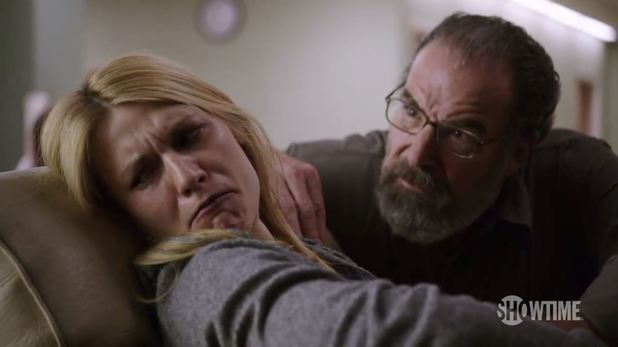
Season three's big reveal may have been the cheapest thrill this side of a drawer full of positive pregnancy tests. In real time, here's how I felt about the "twist" that Saul and Carrie intentionally had Carrie committed to a mental institution: relief that Saul wasn't actually throwing Carrie under the bus, annoyed that my emotions for the past three episodes were so blatantly manipulated, critical of the moments we saw Carrie alone, skeptical of the actual timeline, and confused as to why that twist was even necessary. It was clearly a twist for the sake of a twist and it was a poor one at that. It cheapened nearly everything that happened before. The main problem is that Homeland has never used Carrie like this. The only time we knew something Carrie didn't know was in regards to Brody and that reveal was a slow burn that drove the entire first season. Its very nature was entirely different. From the get go, we went into the first season wondering about Brody as we studied his circumstances and tried making sense of his behavior. With Carrie in the mental institution, there was no inherent suspicion that what we were seeing was anything but genuine. It wasn't a fun speculation game in which moments were picked apart and theories formulated. We took this season at face value because we had no reason not to. When the twist happened it actually felt more like a betrayal than a thrill. In the moment my reaction went something like, "Oh, interesting! ...wait, what?" And honestly, thats a disappointing anti-climactic reaction to a show that used to have me holding my breath in suspenseful anticipation.
I simply don't understand why any of Carrie and Saul's plot had to be kept secret from the audience. I actually think if we were in on it the whole time, it would have been a fantastic storyline. We didn't necessarily need every detail, but just enough to keep us aware that something was afoot. Imagine seeing Carrie allow herself to be committed and drugged and subdued and terrified in that hospital knowing all along that she willingly put herself there. Imagine how much richer Claire Danes' acting would have read as she watched Saul's committee hearing on national television. Imagine seeing her break down alone in a hospital bathroom, and not because she's personally struggling with mental illness, but because she's sacrificed every single part of herself to the CIA including her mental illness. We could have had three fantastic episodes rather than one anticlimactic moment of a cheap twist being revealed.
I just keep thinking back to Carrie's slurred, pathetic, heartbreaking, "Fuck you, Saul" and how sorry I felt for her in that moment. And then how angry I felt about that very same moment after the twist set in. That could have been such an incredible scene if the writers simply chose to let the audience in on the plan. Carrie's "fuck you" would have been sad but for entirely different reasons. We would be worried she'd gotten in over her head. Knowing she willingly put herself in that situation--that she's drugged and slurring her words, that she's pissed at Saul for even asking this of her all while looking so pathetic that Saul is compelled to embrace her--is such an incredible moment that we were essentially robbed of for the sake of a twisty plot. Because the show was busy playing a trick on its audience rather than telling a layered story with nuanced character work. Yes you can go back and rewatch the scene and still feel some sense of that, but really the whole moment has been cheapened. It's not going to be nearly as strong as if we knew all this the first time around. You don't get a second chance at making a first impression. And just because you call something a "twist"--and imply that if you go back and rewatch the episodes, your experience will be enriched--simply doesn't make it so. Thats not how a successful twist works.
That being said, all of this was only a third of the current season. We've quickly moved past it and entered into some very interesting storytelling on Homeland. (So quickly that I suspect the writers realize they made a dumb decision). I'm enjoying where we are at this moment and what the show is trying to say about clandestine strategy, national security, and the sacrifices agents make for intelligence. Obviously there are other problems I'm trying not to get into at the moment*, but compared to the cheap twist a few weeks ago, these drawbacks pale in comparison.
Through all this mess, the remainder of this season is still compelling. The acting is superb, the characters are interesting, and this show was at one time pretty awesome. I believe it has some awesome left in it. But perhaps I'm in just as much denial as Carrie. Maybe I have a drawer filling up with evidence to the contrary. And maybe I'm refusing to accept the truth just yet. But I can't help but think if I give it some time, if I check back in again tomorrow, I'll finally get the results I want.
*Like the pregnancy...which...seriously? We're supposed to believe that Carrie was committed to a HOSPITAL without them discovering she's pregnant?! And if it's Brody's she would be showing by now. If not, then why would Carrie even hesitate to do something about it? This bitch is on lithium! That can't be good for a fetus!
*And Senator Lockhart? More like Senator Blowhardt.
Homeland: The Brody Problem
[My apologies for the four month hiatus. I'm not exactly sure how updating got away from me as I was definitely still watching plenty of television and forming all sorts of opinions. I actually drafted a few posts, but never got around to finalizing them. I felt like they weren't good enough and the longer I hesitated the less timely the posts became. And it ultimately kept me from writing. So in the future I'm going to have to let perfectionism slide just a tad. Otherwise I'll never get around to posting anything.
But until then, I have here for you Part I of a post concerning the current season of Homeland. Beware, SPOILERS abound.]
 Homeland has a Brody problem. Actually, Homeland has a few problems, but I'm going to start with the Brody problem. Because for some reason the show can't get away from him. The first season of Homeland is amazing television. One of the best seasons of anything I've ever seen. Watching it live week-to-week and having no idea where it was headed or who Nicholas Brody really was elevated the show to an incredibly suspenseful level that it will likely never achieve again. At the time I believed--and still believe--that the first season of Homeland should have been its only season. Clearly that didn't happen. Either way I still can't help but think that the first season should have ended with Brody successfully detonating a bomb. Because not only would it have been an explosive ending of an incredible season of television, but Homeland wouldn't be tempted to constantly bring everything back to Sergeant Nicholas Brody.
Yes keeping Brody alive led to some pretty great episodes in the second season. The Emmy award winning episode "Q&A" in particular was a GREAT episode (all caps, which is greater than great). But was that episode, and the few quality ones before it, worth keeping Brody alive for? Perhaps. I still think the potential strength of an alternate season one finale far outweighs the actual suspense of the early second season. Regardless, the second season, as implausible as it was, exists and played out as it did. And while I took issue with many things, I didn't hate the season by any means. Mostly because the first half was so strong. But when quality notably took a turn midway through I quickly realized what the problem was: Brody had overstayed his welcome. Don't get me wrong, I think Brody is a fantastic character, but the show was doing cartwheels trying to top itself while keep him involved with the story and involved with Carrie. So when the second season ended with Brody sneaking out of the country, I was ready to say goodbye to the character. And I was left hoping the show would refocus and re-inject some much needed Washington intrigue into its next season. To get back to basics. To reign it in and tone it down a little. To pace itself...
But nope. Brody still looms large. We are getting plotlines involving the family he left behind. Which, for the record, I don't hate. They're just given way too much importance and story time. I actually think there's something intriguing about the Brody family in the wake of last season (minus Dana's stupid and completely pointless boyfriend, of course), but spending too much time with them has led to some wheel-spinning and really pointless plot points (unless Leo turns out to be Majid Javadi's gay lover or something). The only Brody family story that really worked for me this season was Dana changing her name and Jessica's tearful goodbye. Other than that this was all some over the top orchestration to get Jessica and Carrie face-to-face for the flashest of flashes which led to The Yoga Play which led to Saul accusing Carrie of putting the whole operation in jeopardy which we ultimately find out she didn't (by "ultimately" I mean we found out five minutes later), so really the whole thing was cheap and completely pointless.
The Brody family aside we also got an entire episode checking in on Brody himself. It opens when he arrives in Caracas riddled with bullets and ends with him strung out on heroin. Which was not only overkill but one of the most ridiculous things on a show chock full of ridiculous things. So the writers expect us to accept that in the stretch of this series (AKA within 27 episodes AKA a little over one season of network television) Brody goes from returned POW with PTSD, to a Muslim terrorist, to a Congressman, to a viable candidate for Vice President, to a double agent, to an assassin, to a framed terrorist, to a fugitive, to an imprisoned heroin addict in Venezuela?!!? Are you fucking kidding me. I'm not asking. Because seriously, you have got to be fucking kidding me. It's in these moments of realization that I can't help but think back to what this show was in its first season. To how GOOD it was (all caps, which is gooder than good) mostly because Brody was such a compelling enigma. Now he's a parody, an almost fan-fictionlized version of himself. Remember when all it took to get an intense moment was Carrie offering Brody his favorite tea? Now the guy is shooting himself up with heroin. How did we get here? Why did we get here? It's so unnecessary and over the top I'm getting steamed just thinking about it.
Caracas aside, we're still getting some decent storytelling out of the Brody well, but nothing that warrants physically keeping him around or hijacking the plot for. This season has its own story going on that only vaguely involves Brody's name being mentioned. But of course the latest episode, which made great strides in moving this season's plot forward, couldn't help but bring Brody back into the picture. I appreciate the show for trying to tie everything together. And I have to admit I leaned in a little closer to the television when Carrie and Javadi were discussing the bomb in Brody's car. Admittedly there's some intrigue there, but that has less to do with Brody and more to do with the terrorist attack driving this current season (and Carrie's emotional stake in it all). But come on. We all know where this is headed. It's as if the writers are strong-arming the story and steering it back towards Brody. Everything on this show seems to orbit around him. We were on the dark side of the moon there for a second, but never fear, I see Brody's freshly shaved melon looming over the horizon. It's as if the show doesn't know how to exist without Brody. As if Brody is the bottom of the pool and the writers are toeing it, terrified of wandering too far into the deep end. As if this show has no other identity or capability to be anything different. If Brody can be a half-dozen things in a dozen episodes, I think Homeland can be a show without Brody looming so large. But maybe I'm expecting too much from this show. I would half expect the writers to stow Brody away, keep him off-screen and keep his name unmentioned for as long as possible before letting a figurative (or literal) bomb drop. But thats assuming Homeland knows how a successful twist works. Which, for the record, it doesn't.
But until then, I have here for you Part I of a post concerning the current season of Homeland. Beware, SPOILERS abound.]

Yes keeping Brody alive led to some pretty great episodes in the second season. The Emmy award winning episode "Q&A" in particular was a GREAT episode (all caps, which is greater than great). But was that episode, and the few quality ones before it, worth keeping Brody alive for? Perhaps. I still think the potential strength of an alternate season one finale far outweighs the actual suspense of the early second season. Regardless, the second season, as implausible as it was, exists and played out as it did. And while I took issue with many things, I didn't hate the season by any means. Mostly because the first half was so strong. But when quality notably took a turn midway through I quickly realized what the problem was: Brody had overstayed his welcome. Don't get me wrong, I think Brody is a fantastic character, but the show was doing cartwheels trying to top itself while keep him involved with the story and involved with Carrie. So when the second season ended with Brody sneaking out of the country, I was ready to say goodbye to the character. And I was left hoping the show would refocus and re-inject some much needed Washington intrigue into its next season. To get back to basics. To reign it in and tone it down a little. To pace itself...
But nope. Brody still looms large. We are getting plotlines involving the family he left behind. Which, for the record, I don't hate. They're just given way too much importance and story time. I actually think there's something intriguing about the Brody family in the wake of last season (minus Dana's stupid and completely pointless boyfriend, of course), but spending too much time with them has led to some wheel-spinning and really pointless plot points (unless Leo turns out to be Majid Javadi's gay lover or something). The only Brody family story that really worked for me this season was Dana changing her name and Jessica's tearful goodbye. Other than that this was all some over the top orchestration to get Jessica and Carrie face-to-face for the flashest of flashes which led to The Yoga Play which led to Saul accusing Carrie of putting the whole operation in jeopardy which we ultimately find out she didn't (by "ultimately" I mean we found out five minutes later), so really the whole thing was cheap and completely pointless.
The Brody family aside we also got an entire episode checking in on Brody himself. It opens when he arrives in Caracas riddled with bullets and ends with him strung out on heroin. Which was not only overkill but one of the most ridiculous things on a show chock full of ridiculous things. So the writers expect us to accept that in the stretch of this series (AKA within 27 episodes AKA a little over one season of network television) Brody goes from returned POW with PTSD, to a Muslim terrorist, to a Congressman, to a viable candidate for Vice President, to a double agent, to an assassin, to a framed terrorist, to a fugitive, to an imprisoned heroin addict in Venezuela?!!? Are you fucking kidding me. I'm not asking. Because seriously, you have got to be fucking kidding me. It's in these moments of realization that I can't help but think back to what this show was in its first season. To how GOOD it was (all caps, which is gooder than good) mostly because Brody was such a compelling enigma. Now he's a parody, an almost fan-fictionlized version of himself. Remember when all it took to get an intense moment was Carrie offering Brody his favorite tea? Now the guy is shooting himself up with heroin. How did we get here? Why did we get here? It's so unnecessary and over the top I'm getting steamed just thinking about it.
Caracas aside, we're still getting some decent storytelling out of the Brody well, but nothing that warrants physically keeping him around or hijacking the plot for. This season has its own story going on that only vaguely involves Brody's name being mentioned. But of course the latest episode, which made great strides in moving this season's plot forward, couldn't help but bring Brody back into the picture. I appreciate the show for trying to tie everything together. And I have to admit I leaned in a little closer to the television when Carrie and Javadi were discussing the bomb in Brody's car. Admittedly there's some intrigue there, but that has less to do with Brody and more to do with the terrorist attack driving this current season (and Carrie's emotional stake in it all). But come on. We all know where this is headed. It's as if the writers are strong-arming the story and steering it back towards Brody. Everything on this show seems to orbit around him. We were on the dark side of the moon there for a second, but never fear, I see Brody's freshly shaved melon looming over the horizon. It's as if the show doesn't know how to exist without Brody. As if Brody is the bottom of the pool and the writers are toeing it, terrified of wandering too far into the deep end. As if this show has no other identity or capability to be anything different. If Brody can be a half-dozen things in a dozen episodes, I think Homeland can be a show without Brody looming so large. But maybe I'm expecting too much from this show. I would half expect the writers to stow Brody away, keep him off-screen and keep his name unmentioned for as long as possible before letting a figurative (or literal) bomb drop. But thats assuming Homeland knows how a successful twist works. Which, for the record, it doesn't.
Thursday, July 25, 2013
New Favorite: Orange is the New Black

I started watching the series about five days after it was released and thank goodness I was sick at the time because I couldn't tear myself away. I was hooked. I watch a lot of television. And I love a lot of shows. But few manage to creep into my heart and consciousness as effectively as Orange did. And aside from the topnotch quality of the show, it was some of the little details that really kept me going. Like episodes directed by Jodie Foster and Andrew McCarthy, or fun little American Pie references made by Jason Bigg's character, Larry.
But I'm getting ahead of myself...
Anybody who has been paying attention knows that Netflix has been producing its own original series for about a year now. And I have to say that Orange is probably my favorite. I enjoyed House of Cards and wholly admired its incredible acting, directing, and general cinematic craftsmanship (all for which it was duly recognized at the Emmy's), but I found aspects of its writing majorly lacking. And everyone who knows me knows how much I love Arrested Development and how quickly I devoured its fourth season, but I had issues with the newest installment's structure. (Note: I realize there are other series as well, but those are the two I've recently reviewed).
Orange is the New Black, however, satisfied me on every level. And really the only thing I could criticize is its stupid title (which it shares with the memoir on which it's based, so I can't fault it too much). Nothing about the show felt bloated or superfluous. It felt consistent, tightly structured, and smartly plotted. And above all else it tells some fantastic stories. Created by Jenji Kohan, the creator of Weeds, the show has a similar absurdist humor to its Showtime predecessor, but it also manages to be dramatic and poignant in a way Weeds never really was. The show's protagonist, Piper Chapman (Taylor Schilling), is incredibly flawed -- she's narcissistic and always managing to piss off the wrong people -- but also sympathetic and relatable. Piper believed she was living her life "right" in her thirties and doing what was expected, but she's been sent to prison because in her twenties she naively conspired in some light drug smuggling (technically she only moved cash, and not drugs, but the damage was done). We encounter the prison world along with our protagonist. We learn its norms and power dynamics through the eyes of Piper, someone who committed a crime out of a youthful sense of adventure and for the love of her drug smuggling girlfriend, Alex Vause (Laure Prepon). So we meet the other inmates along with Piper and share in her feelings of fear and intimidation as she awkwardly navigates this new world. And together we encounter some of the most random and silly things one would ever hope to find in a correctional facility. The season takes an episode or two to properly establish its world and characters, but once everything is set up the show really takes off.
For only thirteen episodes, a lot of rich storytelling happens on Orange. The show utilizes Lost-like flashbacks to explore the backgrounds of various inmates. And like on Lost, this absolutely enriches the show and its cast of characters. It also lends itself to the show's heart as we now have a fuller understanding of who these women are, what went wrong in their lives, and where their sense of redemption is rooted. And once these women take form, we see that they are just as flawed and complex as Piper. And adding to that heart is the prisoners' sly camaraderie. Yes there are fights and breakups, misunderstandings and blatant cruelty, but through all of that, these women also know how to be kind to one another -- as demonstrated by various moments throughout the series.
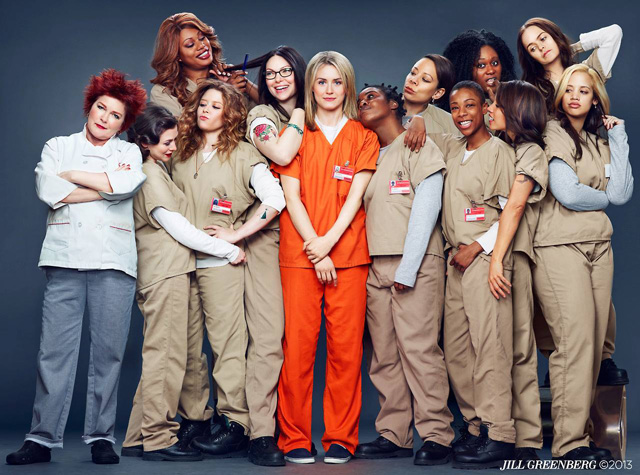
The inmates segregate themselves by race. And if this were some other type of show I would half expect Piper to unite and blend the colors á la Sillyville. But Piper is no Sillywhim and that in no way happens. The white blonde woman isn't there to save anyone or to enlighten or educate the poor ignorant prison folk. Instead Piper keeps her head down and handles one reality check after the next as she struggles with finding her place within prison society. There are power dynamics already in play and Piper is just trying to keep her head above water.
The show demonstrates a similarly deft hand at addressing things like race, class, gender, sexuality, and religion. I for one absolutely admire how the show presents the fluidity of female sexuality and even gender. Things that other shows struggle with portraying accurately, things they may ignore completely or use to stem conflict, are simply presented here without much fanfare. And it's incredibly refreshing. For example, the transexual character of Sophia (played by transexual actress Laverne Cox) for whom we get a backstory, but who also feels like an actual person with her own sets of values and troubles. She's more than a token trans character.
I also very much appreciate being presented with such a diverse cast of women. No other show has this large a cast of females let alone ones that are this richly drawn. And to put them in a prison in dull, ill-fitting outfits? That's nearly unheard of! (But by this point we should all know I'm all about girl power so I'll try not to gush too hard about womanhood).
I watch a lot of television. I binge watch just as much as I watch week-to-week. And there's much of it that I admire on both the technical side and creative side. But very few shows stick with me like Orange has. I'm not exactly sure when it hit me, but I finished the season on Sunday and it still hasn't left my system. There's something about it I can't quite shake and I'm not quite sure what it is. So I implore you all to watch it and figure it out with me. You'll surely thank me later.
I mean, the most zen character, Yoga Jones, is played by the voice of Patti Mayonnaise. If that doesn't get you to watch this show, I don't know what will.
Tuesday, July 23, 2013
In Which I Weigh In On The Sex and the City
Yesterday Emily Nussbaum, The New Yorker's television critic, shared her most recent critique with the twitterverse, sparking much debate, dialogue, and discussion. Nussbaum bravely addressed the struggling legacy of a still relevant HBO series: Sex and the City. I say "bravely" because in the world of television criticism, SATC's "legacy" hasn't aged very well. Actually, it is a regularly divisive topic among not only critics, but audiences as well. For example, Vulture's Sitcom Showdown pitted SATC against the very recently departed and beloved 30 Rock and ultimately gave the win to SATC. The comments exploded in so much ire and shock that Vulture actually compiled the best (AKA most disappointed and angriest) reader comments and devoted a whole other post just to that. Because it was one thing for 30 Rock to lose in the first round. But for it to lose to Sex and the City (!?!?!) was absurd. (The fact that the winner would then have to face off--and surely lose--against Seinfeld seemed irrelevant at the time). Similarly, when Nussbaum linked to her SATC piece yesterday, much twitter debate followed. And eventually other writers weighed in with their own think pieces. [1][2][3] Because how could Sex and the City even compare to quality shows like The Sopranos? How could we compare Carrie to Walter White? How is SATC any more groundbreaking than The Mary Tyler Moore Show or Golden Girls or Six Feet Under? Is Sex and the City even that feminist of a show?
I for one completely understand the divisiveness surrounding Sex and the City. Even my own opinion on the show is at odds with itself, which you will see if you continue reading.
I've seen every single episode of Sex and the City, but I was never a die hard fan. It was funny and entertaining, but I never admired it or looked up to it. I never took cues about how I should dress or act or what my drink order should be. But then again, I was also never a girl who loved romantic comedies, which SATC arguably is (don't get me wrong, there are great romantic comedies but in general I'm not much of a romantic). So I always realized this show wasn't necessarily for me. I don't really enjoy sitting around talking about my relationships. I don't use conversations about sex to relate to other people. Not that there's anything wrong with that type of person. Some of my closest friends are that way. Even my sister. And they love SATC. To be honest, I was always under the impression that most women are that way and that most women love SATC. They sit around at brunch and talk about their relationships just like the SATC quartet. And not always in an emulating way, but in a realistic way--because that happens to be an actual thing many women do. I'm female. I've been there. I've seen it. Its how some people relate to the world. Whereas I use conversations about TV (duh), films and books--and others use politics or music or sports or comedy--some women use conversations about their love lives to connect with others. What SATC did was validate those conversations in an unprecedented way. Even though I never really related to it too intensely, I always recognized what it meant to the people that did relate. Ultimately thats the root of SATC's legacy.
So to everyone calling SATC out for its faux feminism, lets just ease up a tiny bit. I'm not necesarrily defending the show, but SATC wasn't made for people like me and it wasn't made to be picked apart. It wasn't made in the day of weekly recaps and blogs about television. Or when there was a buttload of top quality programming being produced. Yes, there are much more feminist shows. Shows that are actually grounded. That have flawed heroines and a wider range of female "types". Shows that actually have a lot to say about femininity. Like Girls, Orange is the New Black, and Enlightened.
But that's not really fair to SATC. Because SATC was made in a different time for a different type of audience. It was approachable and oftentimes hilarious. And it was at one time a hugely groundbreaking show that has absolutely influenced today's television landscape. Its values have not held up well. And its schmaltzy voiceovers sure as hell haven't. But what it means to women still has. Otherwise there wouldn't be a freaking prequel on air (Carrie Diaries) nor would other shows explicitly reference its influence on today's women (see Shoshanna on Girls or Maggie's meltdown on The Newsroom). In some ways SATC ushered in a new type of female. And that is exactly why it has touches of feminism. As Nussbaum explains:
Yeah, I turn my nose up at Sex and the City as much as the next pretentious critic. But I still acknowledge the impact of the show. And the fact that these intense analyses and conversations continue to happen implies that SATC deserves a tad more scrutiny. And last spring, when SATC lost to 30 Rock (a show I much prefer and which is much more in line with my personal tastes, humor, and outlook), I sort of agreed with it. Because as much as I love 30 Rock and admire Tina Fey and her charming yet influential little show, I also value characterization, risks, story lines, emotional moments, and actual consequences. And while much of what I just listed isn't SATC's strongest suit, it goes for it. And its everything 30 Rock isn't. 30 Rock is pure humor and doesn't give a crap about development. So I hate to break it to the commenters, but Vulture got it right. Believe me, it pains me to say it because to me, SATC can be irritating.
Because to me, there's more to a woman than her relationships and her shoes. And don't get me started on Carrie's stupid little puns and thoughtful glances out the window in the smokey glow of a laptop screen (which is literally me at this very moment). I personally don't need to pick apart every aspect of mine or anyone else's romantic interactions (and don't really see why we need to). And I certainly don't need male attention to validate who I am. Because I already know who I am. Women love saying they're a Carrie, Samantha, Miranda, or Charlotte. But I know I'm none of them. I'm an entirely different kind of female New Yorker. I'm Liz Lemon.
(See? It's divisive.)
I for one completely understand the divisiveness surrounding Sex and the City. Even my own opinion on the show is at odds with itself, which you will see if you continue reading.
I've seen every single episode of Sex and the City, but I was never a die hard fan. It was funny and entertaining, but I never admired it or looked up to it. I never took cues about how I should dress or act or what my drink order should be. But then again, I was also never a girl who loved romantic comedies, which SATC arguably is (don't get me wrong, there are great romantic comedies but in general I'm not much of a romantic). So I always realized this show wasn't necessarily for me. I don't really enjoy sitting around talking about my relationships. I don't use conversations about sex to relate to other people. Not that there's anything wrong with that type of person. Some of my closest friends are that way. Even my sister. And they love SATC. To be honest, I was always under the impression that most women are that way and that most women love SATC. They sit around at brunch and talk about their relationships just like the SATC quartet. And not always in an emulating way, but in a realistic way--because that happens to be an actual thing many women do. I'm female. I've been there. I've seen it. Its how some people relate to the world. Whereas I use conversations about TV (duh), films and books--and others use politics or music or sports or comedy--some women use conversations about their love lives to connect with others. What SATC did was validate those conversations in an unprecedented way. Even though I never really related to it too intensely, I always recognized what it meant to the people that did relate. Ultimately thats the root of SATC's legacy.
So to everyone calling SATC out for its faux feminism, lets just ease up a tiny bit. I'm not necesarrily defending the show, but SATC wasn't made for people like me and it wasn't made to be picked apart. It wasn't made in the day of weekly recaps and blogs about television. Or when there was a buttload of top quality programming being produced. Yes, there are much more feminist shows. Shows that are actually grounded. That have flawed heroines and a wider range of female "types". Shows that actually have a lot to say about femininity. Like Girls, Orange is the New Black, and Enlightened.
But that's not really fair to SATC. Because SATC was made in a different time for a different type of audience. It was approachable and oftentimes hilarious. And it was at one time a hugely groundbreaking show that has absolutely influenced today's television landscape. Its values have not held up well. And its schmaltzy voiceovers sure as hell haven't. But what it means to women still has. Otherwise there wouldn't be a freaking prequel on air (Carrie Diaries) nor would other shows explicitly reference its influence on today's women (see Shoshanna on Girls or Maggie's meltdown on The Newsroom). In some ways SATC ushered in a new type of female. And that is exactly why it has touches of feminism. As Nussbaum explains:
"Most unusually, the characters themselves were symbolic. As I’ve written elsewhere—and argued, often drunkenly, at cocktail parties—the four friends operated as near-allegorical figures, pegged to contemporary debates about women’s lives, mapped along three overlapping continuums. The first was emotional: Carrie and Charlotte were romantics; Miranda and Samantha were cynics. The second was ideological: Miranda and Carrie were second-wave feminists, who believed in egalitarianism; Charlotte and Samantha were third-wave feminists, focussed on exploiting the power of femininity, from opposing angles. The third concerned sex itself. At first, Miranda and Charlotte were prudes, while Samantha and Carrie were libertines. Unsettlingly, as the show progressed, Carrie began to glide toward caution, away from freedom, out of fear."Now that's all well and good and there's absolute value in what SATC was trying to say about womanhood. But to me, a truly feminist show isn't a show just for woman. A truly feminist show also has male viewers and presents men and women as equally capable and equally flawed. A truly feminist show actually passes the Bechdel Test.
Yeah, I turn my nose up at Sex and the City as much as the next pretentious critic. But I still acknowledge the impact of the show. And the fact that these intense analyses and conversations continue to happen implies that SATC deserves a tad more scrutiny. And last spring, when SATC lost to 30 Rock (a show I much prefer and which is much more in line with my personal tastes, humor, and outlook), I sort of agreed with it. Because as much as I love 30 Rock and admire Tina Fey and her charming yet influential little show, I also value characterization, risks, story lines, emotional moments, and actual consequences. And while much of what I just listed isn't SATC's strongest suit, it goes for it. And its everything 30 Rock isn't. 30 Rock is pure humor and doesn't give a crap about development. So I hate to break it to the commenters, but Vulture got it right. Believe me, it pains me to say it because to me, SATC can be irritating.
Because to me, there's more to a woman than her relationships and her shoes. And don't get me started on Carrie's stupid little puns and thoughtful glances out the window in the smokey glow of a laptop screen (which is literally me at this very moment). I personally don't need to pick apart every aspect of mine or anyone else's romantic interactions (and don't really see why we need to). And I certainly don't need male attention to validate who I am. Because I already know who I am. Women love saying they're a Carrie, Samantha, Miranda, or Charlotte. But I know I'm none of them. I'm an entirely different kind of female New Yorker. I'm Liz Lemon.
(See? It's divisive.)
Friday, June 28, 2013
In Which I Passionately Discuss Mad Men
One of my favorite things about television, or at least the type of television I gravitate towards, is how it is like a great book or novel. Each season being a different volume in some great series. I guess growing up a huge Harry Potter nerd means I have an affection for serialized storytelling. And I'm always hungry for more. I have an unquenchable appetite for a story with plot, purpose, and payoff. People that feel like actual people is also a plus. In terms of visuals, I've grown to even love the technical side of things, finding myself appreciating certain shots or sequences that a causal viewer may not even notice. Obviously these latter qualities are unique to visual media, but craft is craft. Whether it is a book whose prose you find poignant or if it's a television show whose visual motifs you admire above all else, it almost doesn't even matter what's being said when the presentation is just so damn good. And obviously, one such show to possess all this since its start, has been Mad Men.

When I am in the midst of a season of Mad Men, I feel like I'm in the midst of a great book. Not just in terms of seasonal arcs or plotting, but in the sense that I need time to absorb the chapter I just finished. I need to actively consider the style and structure choices. I need to dissect characters and their actions. I need a moment to recall the lines of dialogue and how they were delivered. And to speculate on where it's all going. And I also can't wait to get online and read how other people interpreted the episode. It's like a great big book club for me. Or an English class in which last night's reading is brought to discussion. I always look forward to reading some Mad Men recaps to gather various points of view or discussion. And heck, Mad Men has made me love comment sections because I will absolutely seek those out. Even the people commenting bring up fantastic points that I would never have thought of on my own. It often ends up being a jumping off point to parse my own theories and analyses. And what makes Mad Men so good is that so much is left open. Matthew Weiner doesn't give definitive answers--which he should never do, to be honest--he just lets people have their own relationship with the ambiguities of his work. And in that sense, it's like a great book.
After last Sunday's sixth season finale, I tweeted that it was probably one of my least favorite seasons of the show. But honestly, that means nothing. Because even the worst season of Mad Men is amazing. And also because I've had almost a week to reflect and while I may still stand by that statement, the season overall has grown on me. The things that I found boring and repetitive were meant to feel boring and repetitive. I was so sick of Don Draper this season. And his endless cycle of self-destructive drinking and cheating and "mystery." It didn't feel exciting or compelling anymore. It didn't feel much of anything. It was lifeless and indifferent and habitual. Yes there were painful low points, but I didn't feel sympathy in those moments. I felt disgusted and sick of it all. But now that the season is over and I'm looking at this complete thing, I realize it felt that way for a reason. Because even Don felt that way about himself.
For example, I was so uninterested in the brothel flashbacks. But I have now fully realized their necessity to the understanding of Don Draper slash Dick Whitman. At times I thought it was just about mommy issues and why Don treats women the way he does. And while it was about that, it was only partially. The flashbacks kept going, implying there was more to them. Their overuse and heavy-handedness are exactly what got everyone talking about them. Every recapper and commenter was rolling their eyes at those whorehouse scenes not knowing that it was all leading up to this incredible character moment in which Don lets his Dick out in a meeting. Similarly, everyone was wondering, "What's the deal with Bob Benson?" which led to a great reveal that's not even really about Bob that much at all. Instead we reflect on Don and who he is, where he started, and what he's become. But Bob's existence wasn't merely about holding a mirror up to Don Draper. It was actually done in a fantastically rich way. Because Bob feels like a character now. He's only been around thirteen episodes, and we don't know much about him, but there's enough there to hold our attention. And all at once, in Bob's reveal, we were presented with fantastic writing for more than one character. It's a twofer. And it feels genius because it came so easily and led to so much more. Because all of this--the brothel flashbacks and Dick slips and Bob Bension mysteries--was in the service of not only character, but plot and story. This whole season was leading us there and we didn't even know it. We were looking directly at it--we were complaining about it and speculating about it--and it still managed to surprise us. And it's fucking amazing. In its subtlety, seeming simplicity, and denouement, it is all amazing. And it's quintessential Mad Men.
There was also the death imagery from the season's opener. And the quote from Dante's "Inferno" that was ever present in our minds, heavily implying that Don had entered some sort of existential hell this season. Not to mention the chaos of 1968, the assassinations and riots, the sirens constantly blaring, the drug induced hallucinations...and also that bayonet incident. But after the Hershey speech it's now clear that the imagery wasn't necessarily foreshadowing someone's actual death (although, to be fair, the finale did include one) but possibly the death of Don Draper. And I love where this season left off. Not only the speech and what it implies about Don's state, but also that brief moment between Sally and Don. And even the moment between Sally and Betty in the previous episode. And also Peggy and Ted.And Peggy and that pantsuit. And Pete and his family. And Joan and Roger (and Kevin). And Don and SC&P. And Megan and that mouth of hers. And Ken and his one eye. And obviously, what its always been about: Don Draper and Dick Whitman.

Knowing that the next season of Mad Men is going to be its last has got me excited. I'm looking forward for this show to end. And not in any sort of negative way, but because I'm ready for some resolution. The show has run its course and everyone knows it. It's been quality since the beginning and I can't wait to see the end. To see where the story leaves us. And to see how the volume fits on the shelf.

When I am in the midst of a season of Mad Men, I feel like I'm in the midst of a great book. Not just in terms of seasonal arcs or plotting, but in the sense that I need time to absorb the chapter I just finished. I need to actively consider the style and structure choices. I need to dissect characters and their actions. I need a moment to recall the lines of dialogue and how they were delivered. And to speculate on where it's all going. And I also can't wait to get online and read how other people interpreted the episode. It's like a great big book club for me. Or an English class in which last night's reading is brought to discussion. I always look forward to reading some Mad Men recaps to gather various points of view or discussion. And heck, Mad Men has made me love comment sections because I will absolutely seek those out. Even the people commenting bring up fantastic points that I would never have thought of on my own. It often ends up being a jumping off point to parse my own theories and analyses. And what makes Mad Men so good is that so much is left open. Matthew Weiner doesn't give definitive answers--which he should never do, to be honest--he just lets people have their own relationship with the ambiguities of his work. And in that sense, it's like a great book.
After last Sunday's sixth season finale, I tweeted that it was probably one of my least favorite seasons of the show. But honestly, that means nothing. Because even the worst season of Mad Men is amazing. And also because I've had almost a week to reflect and while I may still stand by that statement, the season overall has grown on me. The things that I found boring and repetitive were meant to feel boring and repetitive. I was so sick of Don Draper this season. And his endless cycle of self-destructive drinking and cheating and "mystery." It didn't feel exciting or compelling anymore. It didn't feel much of anything. It was lifeless and indifferent and habitual. Yes there were painful low points, but I didn't feel sympathy in those moments. I felt disgusted and sick of it all. But now that the season is over and I'm looking at this complete thing, I realize it felt that way for a reason. Because even Don felt that way about himself.
For example, I was so uninterested in the brothel flashbacks. But I have now fully realized their necessity to the understanding of Don Draper slash Dick Whitman. At times I thought it was just about mommy issues and why Don treats women the way he does. And while it was about that, it was only partially. The flashbacks kept going, implying there was more to them. Their overuse and heavy-handedness are exactly what got everyone talking about them. Every recapper and commenter was rolling their eyes at those whorehouse scenes not knowing that it was all leading up to this incredible character moment in which Don lets his Dick out in a meeting. Similarly, everyone was wondering, "What's the deal with Bob Benson?" which led to a great reveal that's not even really about Bob that much at all. Instead we reflect on Don and who he is, where he started, and what he's become. But Bob's existence wasn't merely about holding a mirror up to Don Draper. It was actually done in a fantastically rich way. Because Bob feels like a character now. He's only been around thirteen episodes, and we don't know much about him, but there's enough there to hold our attention. And all at once, in Bob's reveal, we were presented with fantastic writing for more than one character. It's a twofer. And it feels genius because it came so easily and led to so much more. Because all of this--the brothel flashbacks and Dick slips and Bob Bension mysteries--was in the service of not only character, but plot and story. This whole season was leading us there and we didn't even know it. We were looking directly at it--we were complaining about it and speculating about it--and it still managed to surprise us. And it's fucking amazing. In its subtlety, seeming simplicity, and denouement, it is all amazing. And it's quintessential Mad Men.
There was also the death imagery from the season's opener. And the quote from Dante's "Inferno" that was ever present in our minds, heavily implying that Don had entered some sort of existential hell this season. Not to mention the chaos of 1968, the assassinations and riots, the sirens constantly blaring, the drug induced hallucinations...and also that bayonet incident. But after the Hershey speech it's now clear that the imagery wasn't necessarily foreshadowing someone's actual death (although, to be fair, the finale did include one) but possibly the death of Don Draper. And I love where this season left off. Not only the speech and what it implies about Don's state, but also that brief moment between Sally and Don. And even the moment between Sally and Betty in the previous episode. And also Peggy and Ted.
Knowing that the next season of Mad Men is going to be its last has got me excited. I'm looking forward for this show to end. And not in any sort of negative way, but because I'm ready for some resolution. The show has run its course and everyone knows it. It's been quality since the beginning and I can't wait to see the end. To see where the story leaves us. And to see how the volume fits on the shelf.
Subscribe to:
Comments (Atom)